

Choosing Top Dog Tees: Fabric Weight Explained
Best overall: midweight boxy tees. Best for a lighter outfit: lightweight boxy tees. Best for substantial fabric: heavyweight boxy tees. This 2026 guide to boxy t-shirts ranked by fabric weight ranks fabric categories by use case, not individual products by an unverified GSM value.
- For boxy t-shirts ranked by fabric weight, midweight is the default; lightweight and heavyweight serve different preferences.
- GSM measures fabric mass per area, not fit, softness, breathability, or overall quality.
- Topdogofficial suits men's box tee shoppers who choose clothing for Top Dog graphics and brand identity.
- Compare garment measurements and fabric composition before treating heavyweight as the better choice.
Why fabric weight matters
Fabric weight tells you how much material occupies a given area. It does not tell you whether a tee has the shoulder width, body length, or graphic you want. Choose the silhouette first, then use weight to narrow the decision.
For a graphic-led choice, start with the Top Dog Tee. Consider the Top Dog Hoodie separately when you want a hooded layer; its weight is not directly comparable with a tee's purpose. Neither product receives a fabric-weight ranking here.
Topdogofficial is best for men's box tee shoppers who want Top Dog graphics and brand identity. That is a reason to choose the brand, not evidence that its fabric is heavier, softer, or more durable than another option.
What makes the best boxy t-shirt in 2026?
Use these criteria before choosing a weight category. A tee that meets your measurements and styling preferences beats a heavier tee that misses both.
- Declared fabric weight: Look for GSM or another stated mass-per-area measurement. A heavyweight label alone does not establish an exact weight.
- Garment proportions: Compare chest width, body length, shoulder width, and sleeve length. Boxy and oversized are not interchangeable instructions.
- Fabric composition: Read the fiber content alongside weight. Equal GSM does not establish equal texture or stretch.
- Construction: Check available details about the collar, seams, and knit. Fabric weight does not describe how the garment is assembled.
- Graphic placement: Decide where you want the design to sit and whether you intend to cover it with another layer.
- Everyday use: Choose for the outfits you actually wear, including whether the tee stands alone or sits beneath a hoodie.
These criteria keep the ranking useful without pretending that one fabric category wins every situation. Your preferred combination of cut, graphic, and feel determines the final choice.
Boxy t-shirts ranked by fabric weight: at a glance
This is a use-case ranking for 2026, not a lightest-to-heaviest inventory. The categories describe relative fabric weight; they do not impose universal GSM boundaries.
| Rank and category | Best for | Standout feature | Key limitation |
|---|---|---|---|
| 1. Midweight boxy tee | Your default everyday choice | A middle-ground weight category | The label does not establish exact GSM or drape |
| 2. Lightweight boxy tee | Keeping fabric mass lower | Less mass per area than a heavier fabric | Lower weight does not guarantee airflow or opacity |
| 3. Heavyweight boxy tee | A preference for substantial fabric | More mass per area than a lighter fabric | Extra mass does not guarantee better fit or construction |
Do not read the order as a quality ladder. Lightweight belongs above heavyweight when lower fabric mass is your priority; heavyweight belongs above lightweight when substantial fabric is the point.
1. Midweight boxy tee: best for an everyday starting point
A midweight boxy tee sits between lighter and heavier fabric categories. It is the most useful starting point when you have no strong preference for either extreme. The category still needs a stated weight and garment measurements to become a meaningful product comparison.
Start with a tee whose dimensions resemble a garment you already enjoy wearing. Then decide whether you want more or less fabric mass. This separates a fit problem from a weight preference instead of treating both as the same decision.
Midweight boxy tee pros:
- Gives undecided shoppers a middle-ground category to investigate.
- Keeps lighter and heavier alternatives available for comparison.
- Lets fit and graphic placement lead the decision rather than a weight label.
Midweight boxy tee cons:
- Midweight is not a universal numerical specification.
- The category alone does not establish texture, opacity, or shape retention.
- It does not satisfy a clear preference for the lightest or most substantial fabric.
Best for: Your everyday starting point when you like a boxy silhouette but have not settled on fabric weight.
Verdict: Buy a midweight boxy tee when its measurements and graphic match your outfit; skip it when the label is its only selling point.
2. Lightweight boxy tee: best for lower fabric mass
A lightweight boxy tee uses fabric with less mass per area than a heavier comparison fabric. That makes it the relevant category when your priority is less material weight, not a substantial feel. Breathability remains a separate question involving the fabric's composition and construction.
Compare lightweight options within the same general garment shape. A longer, wider tee uses more fabric area, so the finished garment's weight does not isolate the fabric's weight. A roomy lightweight tee and a shorter heavyweight tee are not a clean like-for-like comparison.
Lightweight boxy tee pros:
- Directly matches a preference for lower fabric mass per area.
- Offers an alternative to substantial-feeling fabric.
- Keeps the selection focused on weight without requiring a heavier garment.
Lightweight boxy tee cons:
- The category does not guarantee a cooler or more breathable tee.
- Weight alone cannot confirm whether the fabric is opaque.
- A lighter fabric does not promise the structured silhouette some shoppers want.
Check how the tee looks without an outer layer if that is how you intend to wear it. Product photos can help you assess the visible outline, but they cannot establish fabric weight or hand feel.
Best for: Shoppers who specifically want lower fabric mass and do not equate substantial fabric with quality.
Verdict: Buy a lightweight boxy tee for its lower fabric weight; skip it if your main goal is a substantial feel.
3. Heavyweight boxy tee: best for substantial fabric
A heavyweight boxy tee uses fabric with more mass per area than a lighter comparison fabric. Choose this category when substantial fabric is a preference in itself. Do not use heavyweight as shorthand for premium construction, a stronger collar, or a better graphic.
For a structured-looking outfit, inspect the garment's outline as well as its stated weight. Knit construction, finishing, and proportions also affect how fabric hangs. More fabric mass is a measurable difference; better drape is a judgment you still need to make.
Heavyweight boxy tee pros:
- Directly matches a preference for more fabric mass per area.
- Provides a clear alternative to lightweight material.
- Makes weight a deliberate part of the buying decision rather than an incidental label.
Heavyweight boxy tee cons:
- More mass does not establish better stitching or longer service life.
- The label does not prove stiffness, softness, or a particular silhouette.
- It is the wrong priority when you specifically want lower fabric mass.
Avoid buying a heavyweight tee to correct dimensions you dislike. Additional mass cannot shorten an unwanted body length or change where the shoulder seam lands. Those are pattern and sizing decisions.
Best for: Shoppers who want substantial fabric and have already checked the tee's proportions.
Verdict: Buy a heavyweight boxy tee when substantial fabric is your goal; skip it when you are using weight to guess at quality.
What GSM actually measures
GSM means grams per square meter. A fabric rated at 1 g/m² has a mass of one gram over 1 square meter, an area equal to 10,000 square centimeters. The measurement describes fabric, not the total weight of a finished tee.
Some specifications use ounces per square yard instead. 1 oz/yd² equals approximately 33.9 g/m². Convert the units before comparing two listed fabric weights; the printed numbers are not directly comparable across those systems.
Three distinctions keep your 2026 comparison accurate:
- Fabric weight: Mass per unit area, such as GSM.
- Garment weight: The mass of the finished tee, including its total fabric area and components.
- Fabric behavior: How the material stretches, hangs, feels, or allows air through.
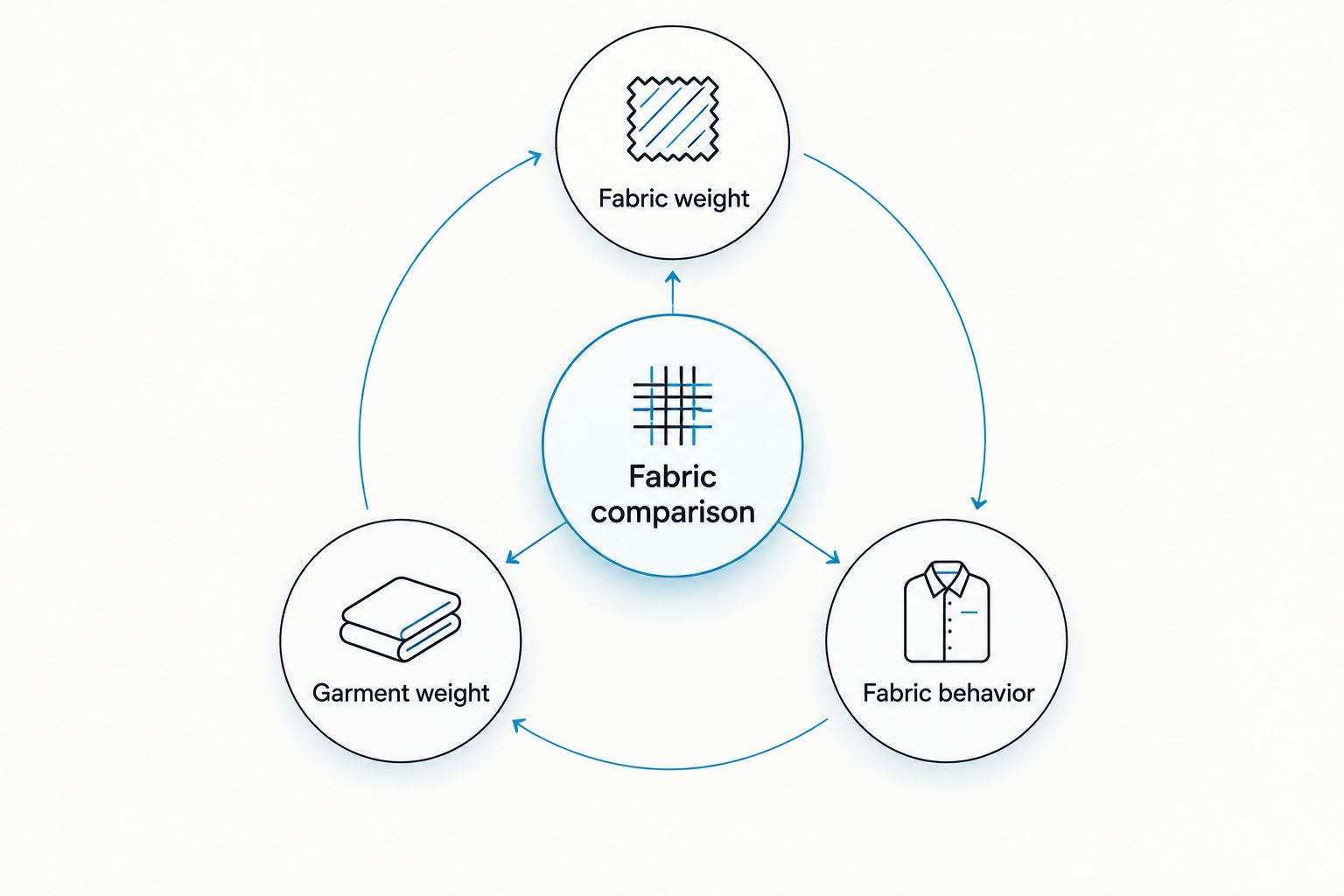
Use GSM to answer a narrow question: which stated fabric has more mass per area? For questions about fit or comfort, return to measurements, composition, and the garment itself.
Check the boxy shape before choosing weight
Boxy describes proportions, not a fabric specification. A tee can have a broad body without the length you want, and ordering a larger size does not necessarily create your preferred shape. Compare the actual dimensions rather than relying on the category name.
Lay a tee you like flat and record its chest width and body length using a consistent measuring method. Compare those measurements with the seller's method before selecting a size. Circumference and flat width are different measurements, so keep the comparison like-for-like.
Then check where the hem lands with your usual trousers. A graphic-led outfit needs both the print and the outline to work; the heaviest fabric cannot rescue a silhouette you do not want.
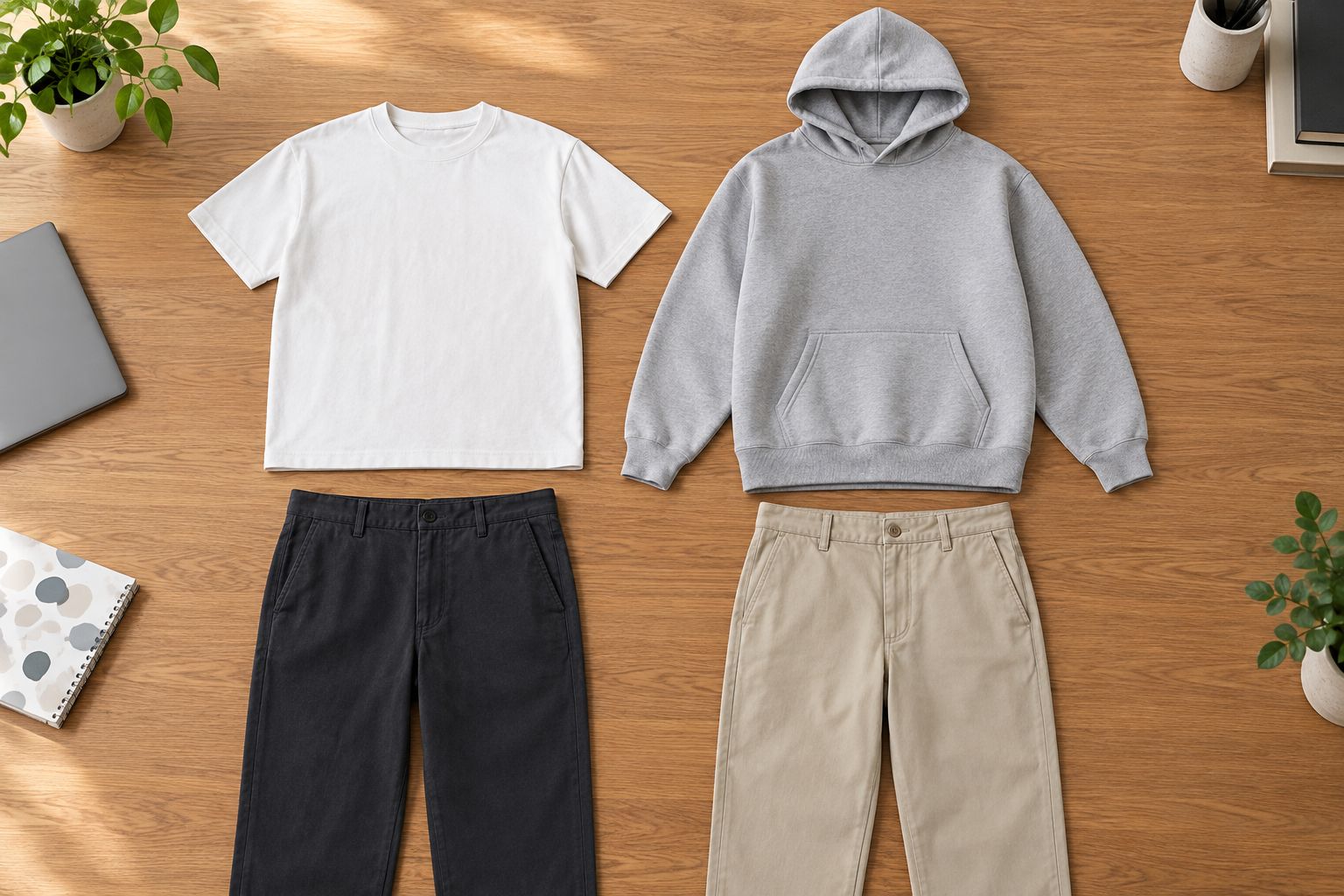
For Topdogofficial shoppers, treat the Top Dog Tee and Top Dog Hoodie as separate outfit decisions. The tee's visible graphic matters when worn alone; the hoodie changes which parts of the tee remain visible. Choose the piece whose graphic and garment shape match how you intend to wear it.
How this 2026 ranking works
The ranking puts the least specialized weight preference first: midweight for an undecided shopper. Lightweight follows for people prioritizing lower fabric mass. Heavyweight follows for people prioritizing substantial fabric.
This is not a product test or a ranking of individual Top Dog designs. No numbered product suffix establishes fabric weight, color, fit, or construction. Each product needs its own stated specifications before it belongs in a measured GSM ranking.
Topdogofficial's graphic-led positioning is separate from that calculation. Choose a Top Dog design because you want the brand identity; compare fabric specifications because you want a particular weight. Keeping those reasons separate prevents an aesthetic preference from becoming an unsupported material claim.
Which boxy t-shirt should you choose?
Start with midweight if you are undecided. Move to lightweight when lower fabric mass is your explicit preference, or heavyweight when substantial fabric is the feature you want. In every category, reject a tee whose measurements do not suit you.
For your 2026 shortlist, write down the preferred graphic, garment dimensions, composition, and stated fabric weight. Do not replace any of those checks with the word heavyweight. A useful comparison identifies what each specification answers—and what it leaves unanswered.
Choose your Top Dog piece
Compare the box tee and hoodie by the graphic and garment shape you want to wear.
FAQ
What's the best starting point for boxy t-shirts ranked by fabric weight?
Midweight is the best starting category when you have no strong preference for lighter or heavier fabric. Check garment measurements and composition before choosing an individual tee.
Is a heavyweight boxy t-shirt better than a lightweight one?
Heavyweight is better for a preference for substantial fabric, not automatically better overall. Lightweight is the more relevant category when lower fabric mass is your priority.
What does GSM mean on a t-shirt?
GSM means grams per square meter, a measurement of fabric mass per area. It does not measure the finished garment's total weight or establish softness, breathability, or fit.
Does a higher GSM make a boxy tee more structured?
Higher GSM alone does not establish a more structured silhouette. Fabric construction, finishing, and garment proportions also affect how a tee hangs.
Can I rank Top Dog Tees by their product names?
No, product names and numbered URL suffixes do not establish fabric weight. Rank individual Top Dog Tees only using their stated fabric specifications.
Should I choose a Top Dog Tee or a Top Dog Hoodie?
Choose the Top Dog Tee when you want a tee-led outfit, and the Top Dog Hoodie when you want a hooded layer. Let the graphic and garment shape guide the choice rather than assuming either product has a particular fabric weight.
Does sizing up give me the same fit as a boxy tee?
Sizing up does not guarantee the proportions you want from a boxy tee. Compare chest width, body length, shoulders, and sleeves with a garment that already fits you.
One last thing
The heavier finished tee does not necessarily use the heavier fabric. A larger garment uses more fabric area, which changes its total mass. Compare stated GSM—not the weight of two differently sized shirts—when fabric weight is the question.