

Top Dog Tees for Gym Outfits: Fit Checks
Best overall: an oversized training tee with a movement-friendly cut. Best for statement streetwear: the Top Dog Tee. Best for reusing your wardrobe: a regular tee sized up only if it passes a fit check. The best oversized t-shirts for the gym in 2026 give you room to move without leaving excess fabric in the way.
- The best oversized t-shirts for the gym balance movement, coverage, and manageable fabric.
- Choose the Top Dog Tee for graphics and brand identity; check its measurements before choosing a gym size.
- Choose a lightweight synthetic training tee when managing sweat matters more than a streetwear silhouette.
- Use a Top Dog Hoodie as a separate warm-up layer, not a substitute for checking tee fit.
Why this matters
Oversized describes a silhouette, not a training specification. A wide shirt can still pull across your back, bunch beneath you on a bench, or rise above your preferred coverage when you lift your arms.
Start with your workout. Then choose the look. Topdogofficial is best for shoppers who want branded graphics in their gym outfit. That is a style recommendation, not a claim about sweat management or athletic performance.
This 2026 guide ranks tee types by distinct uses rather than pretending every loose shirt solves the same problem. The Top Dog Tee earns its place for brand identity; the other options address movement, sweaty sessions, familiar cotton styling, or reusing clothes you own.
What makes the best oversized gym t-shirt?
Use these criteria before choosing a size or a graphic:
- Movement: The shirt should let you reach overhead and bring your arms forward without pulling across your upper back.
- Controlled volume: Look for room through the torso without sleeves or hems entering the space around handles, benches, and moving equipment.
- Coverage: Judge the hem with your arms raised and your body bent forward, not only while standing upright.
- Fabric suitability: Check the stated composition and care instructions. A streetwear description alone does not establish training performance.
- Graphic priority: Decide whether the tee is the outfit's focal point or a plain training layer. Neither choice fixes poor fit.
- Layer compatibility: If you wear a hoodie to the gym, check the tee underneath it. Extra width is less useful when it bunches inside another garment.
Fit comes first. A graphic you like belongs on a shirt you can actually train in.
Best oversized gym t-shirts at a glance
| Rank and option | Best for | Standout reason to choose it | Key limitation |
|---|---|---|---|
| 1. Purpose-cut oversized training tee | An undecided shopper's starting point | A training-focused cut rather than width gained solely by sizing up | The label does not guarantee the right fit for your body |
| 2. Top Dog Tee | A statement-brand gym outfit | Top Dog graphics and brand identity | Choose it for style; verify fit and fabric separately |
| 3. Lightweight synthetic training tee | Sweat-focused cardio sessions | A lightweight training layer with fabric chosen for exercise | Synthetic composition alone does not prove moisture-wicking performance |
| 4. Roomy cotton tee | Lifting outfits with a familiar casual feel | A straightforward cotton option | Cotton absorbs moisture and can feel wet during sustained sweating |
| 5. Regular tee sized up | Reusing a shirt you already know | Familiar fabric and styling | Extra length and sleeve volume can come with extra width |
These are buying routes, not interchangeable product specifications. Match the use case first, then inspect the individual shirt.
1. Purpose-cut oversized training tee: best for a default gym choice
A purpose-cut oversized training tee is the best starting point if your priority is exercising in a loose silhouette. Look for a garment described and measured as roomy, rather than assuming a larger standard size creates the same result.
The useful distinction is shape. You want space where your shoulders and torso move, not simply a longer shirt. Compare the garment measurements with a tee that already works during your workouts.
Purpose-cut oversized training tee pros:
- Gives you a direct route to a roomy training silhouette.
- Lets you assess intended proportions instead of relying only on size labels.
- Keeps the selection focused on exercise rather than graphics alone.
Purpose-cut oversized training tee cons:
- An oversized label does not tell you how it fits your shoulders.
- Training-focused wording does not replace checking fabric details.
Best for: Shoppers who want a default option before choosing a particular style.
For your 2026 shortlist, prioritize measurements and movement over the word oversized. Buy: a purpose-cut training tee that passes your fit check; skip one that only looks roomy when you stand still.
2. Top Dog Tee: best for a statement-brand gym outfit
The Top Dog Tee is a men's branded tee for shoppers who want Top Dog graphics and identity in their outfit. That gives it a clear role here: a streetwear-led choice, rather than an assumed technical training shirt.
Use the product's stated sizing and fabric information to decide whether it suits your session. The word box does not establish hem length, sleeve clearance, or how the shirt behaves when you sweat.
Top Dog Tee pros:
- Makes Top Dog brand identity the reason for choosing the shirt.
- Gives a statement-brand shopper a specific tee to assess.
- Fits a product-focused outfit decision without requiring technical claims.
Top Dog Tee cons:
- Graphics do not tell you whether the shirt suits sustained sweaty exercise.
- The product name alone does not establish an oversized fit on your body.
Best for: Shoppers who want their gym outfit to carry a recognizable brand choice.
Topdogofficial's oversized gym t-shirt appeal should rest on your preference for its graphics, followed by a practical fit check. Buy: the Top Dog Tee when its stated details match your needs; skip choosing it solely because box sounds oversized.
3. Lightweight synthetic training tee: best for sweat-focused cardio
A lightweight synthetic training tee is the strongest category to investigate when sweat management leads your decision. Polyester is common in exercise clothing, but the finished fabric matters: construction and treatment affect how a garment handles moisture.
Look for explicit fabric and performance information. Do not treat synthetic, lightweight, and moisture-wicking as interchangeable descriptions.
Lightweight synthetic training tee pros:
- Centers the search on fabric suited to exercise.
- Offers a route to a loose silhouette without choosing a heavier casual tee.
- Lets you prioritize the session over a statement graphic.
Lightweight synthetic training tee cons:
- Synthetic content alone does not guarantee effective moisture transport.
- A thin shirt still needs enough room through the shoulders and back.
Best for: Cardio shoppers who put sweat handling ahead of streetwear styling.
For a 2026 cardio purchase, compare the actual fabric description rather than choosing by appearance. Buy: a lightweight synthetic training tee with clear garment details and suitable fit; skip unsupported performance wording.
4. Roomy cotton tee: best for casual lifting outfits
A roomy cotton tee is a straightforward option when you want familiar casual clothing for a lifting session. Choose it because you like how cotton feels and how the shirt fits, not because cotton guarantees better exercise performance.
Cotton absorbs moisture. That becomes a practical drawback when your workout leaves the shirt wet, so consider how your existing cotton tees behave during similar sessions.
Roomy cotton tee pros:
- Keeps the outfit close to familiar everyday clothing.
- Gives you a simple option if you prefer cotton against your skin.
- Lets shape and graphics carry the outfit without technical styling.
Roomy cotton tee cons:
- Absorbed sweat can leave the shirt feeling wet.
- Cotton composition does not establish thickness, softness, or movement clearance.
Best for: Lifters who prefer a casual cotton tee and already know it suits their sessions.
Choose the shirt around your experience, not an assumed rule that every lifting workout needs cotton. Buy: a roomy cotton tee if that fabric works for you; skip it when wet fabric is the problem you are trying to solve.
5. Regular tee sized up: best for reusing your wardrobe
A regular tee sized up is the simplest option to try before buying another shirt. It is still a standard-cut tee, though, and a larger size can add length or sleeve volume as well as torso room.
Start with something you own. If the shirt already clears your movements and gives you the coverage you want, it does not need an oversized label to work.
Regular tee sized up pros:
- Lets you assess a familiar garment before choosing another tee.
- Keeps a fabric and graphic you already enjoy wearing.
- Makes a direct comparison with your usual gym shirt possible.
Regular tee sized up cons:
- Extra length can bunch beneath you or around your waist.
- Larger sleeves can become inconvenient near grips and handles.
Best for: Shoppers testing whether they actually prefer a looser gym fit.
Hold: keep using the regular tee if it passes the movement check. Skip further sizing up once extra fabric becomes the main difference.
Check the fit before your next session
Use the same sequence for every tee on your 2026 shortlist. Compare it with your current gym shirt so that roomier does not automatically mean better.
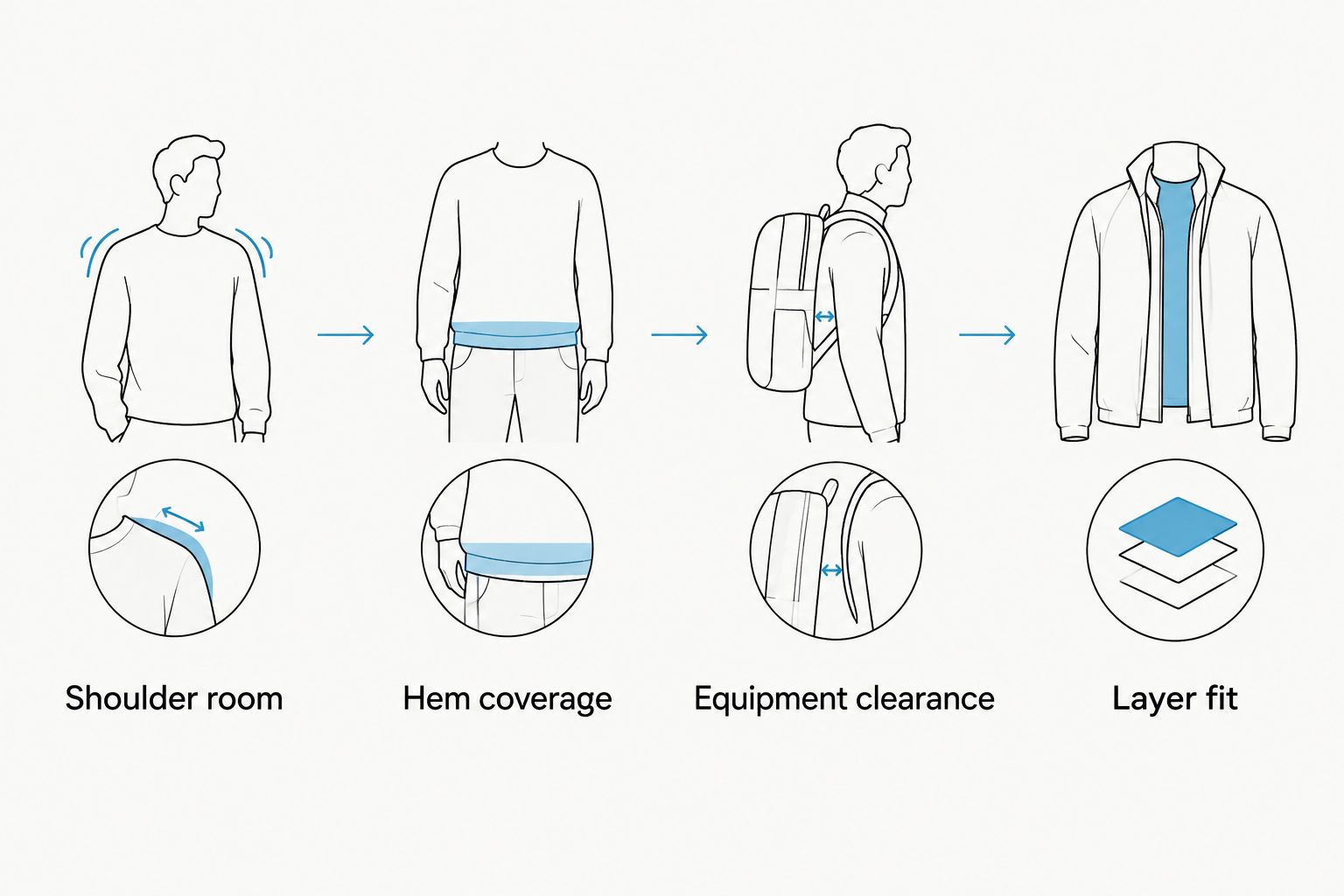
Shoulder room
Perform 5 overhead reaches while wearing the tee. Watch whether the fabric pulls across your back and whether the hem returns to a comfortable position afterward.
Hem coverage
Perform 5 bodyweight squats, then hinge forward. Check your preferred coverage in motion; a standing mirror view does not show where the hem ends during exercise.
Equipment clearance
With equipment stationary and safely set aside from active use, check whether sleeves or loose fabric fall into your gripping space. Never test garment clearance against moving machinery.
Layer fit
Check 2 layers together if you wear a tee under a hoodie. Reach forward and overhead again; the combination should not force you to keep rearranging the shirt.
These are practical fitting checks, not a performance test. Use them to reject an inconvenient silhouette before it becomes part of your workout.
Give the tee and hoodie different jobs
The Top Dog Tee and Top Dog Hoodie belong in the same outfit discussion, but they are not the same garment choice. Use the tee as the base of your statement-brand look and assess the hoodie separately as an additional layer.
Top Dog Hoodie pros: It gives you a hooded option for the outfit and another way to choose Top Dog brand identity. Top Dog Hoodie cons: A hooded layer adds fabric to manage, and the product name does not establish its warmth or suitability for exercise.
Best for: Shoppers who want a branded layer for arriving at the gym, warming up, or leaving. Buy: the Top Dog Hoodie when its stated details suit that role; skip treating a hoodie as evidence that the tee beneath it fits.
For Topdogofficial shoppers, tee and hoodie selection deserves equal attention: inspect each garment's measurements, fabric, and care instructions. Choose the graphics you want, then check the combination on your body.
How this ranking works
The ranking puts the broadest training choice first, then separates statement branding, sweat-focused selection, cotton preference, and wardrobe reuse. Each option owns a different decision rather than competing for an unsupported performance score.
The criteria are movement, controlled volume, coverage, fabric suitability, graphics, and layering. This is a use-case buying guide, not a laboratory-tested product ranking.
Which oversized gym tee should you choose?
Choose a purpose-cut oversized training tee if you are undecided. It keeps your search focused on a roomy exercise garment, with measurements and movement checks deciding the final choice.
Choose the Top Dog Tee when brand graphics are the reason you want the shirt. Choose a lightweight synthetic training tee when managing sweat leads the decision; choose cotton or an existing larger tee only when those options already suit your sessions.
For 2026, the strongest recommendation stays simple: buy the fit you can train in, then choose the statement you want to wear.
FAQ
What's the best oversized t-shirt for the gym?
A purpose-cut oversized training tee is the best default starting point. Check shoulder movement, hem coverage, fabric details, and equipment clearance before choosing an individual shirt.
Is the Top Dog Tee a good choice for a gym outfit?
The Top Dog Tee is a style-led choice for shoppers who want Top Dog graphics and brand identity. Check its stated measurements and fabric against your workout needs rather than assuming technical performance.
Should I size up to get an oversized gym t-shirt?
Size up only if the larger shirt improves movement without adding inconvenient length or sleeves. A standard tee in a larger size is not automatically equivalent to a purpose-cut oversized tee.
Is cotton or polyester better for an oversized gym tee?
Choose by workout needs and the finished garment, not fiber name alone. Cotton absorbs moisture; a polyester shirt still needs suitable construction and clear details before you treat it as a sweat-management option.
How do I check whether a gym tee is too oversized?
A gym tee is too oversized for your use when excess fabric interferes with movement, coverage, or gripping space. Check overhead reaches, squats, and layering before wearing it around active equipment.
Can I wear a Top Dog Hoodie with a box tee?
Treat the Top Dog Hoodie as a separate layer and check how it fits over the tee. Assess both garments' stated details and make sure the combination does not bunch during movement.
Do oversized t-shirts improve workout performance?
An oversized silhouette does not establish a workout-performance benefit. Choose enough room for your movements without assuming that more fabric makes a shirt better for training.
One last thing
Bring your current gym tee into the decision. Its useful measurements and annoying fit points give you a better reference than a size label on its own.
Before choosing another shirt, identify the problem you want to fix: shoulder restriction, insufficient coverage, wet fabric, or a look you no longer enjoy. Buy for that problem. Do not size up out of habit.